
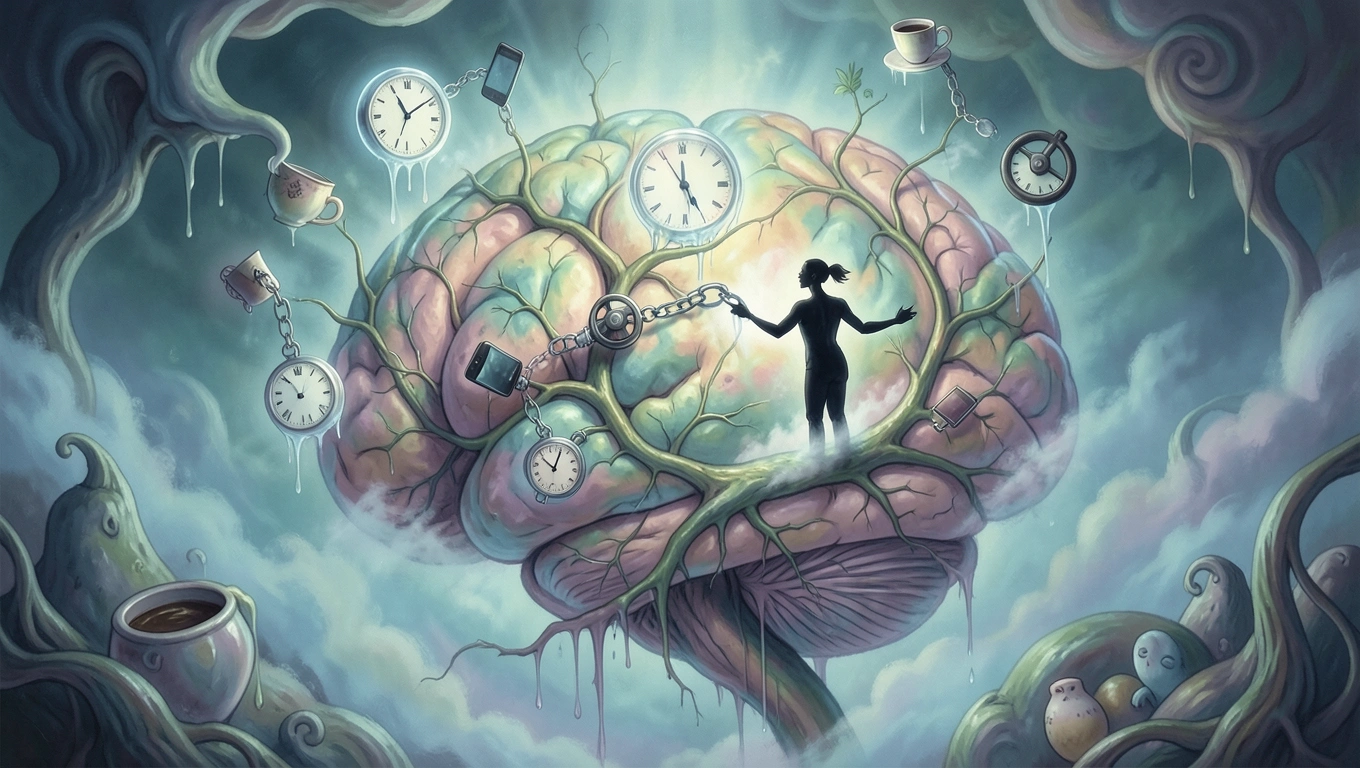
You probably don’t think twice about reaching for your phone first thing in the morning, brewing coffee the same way each day, or taking the same route to work. These everyday habits feel like simple choices, but they’re actually fascinating behavioral patterns that reveal how our brains have evolved to function efficiently. The science behind our daily routines holds some genuinely surprising discoveries – from how long it really takes to form a new habit to why certain behaviors persist even when we’re trying to change them. Understanding these patterns can help you work with your brain’s natural tendencies rather than against them.
The Real Timeline for Building New Habits
For years, you’ve probably heard that it takes 21 days to form a new habit. This widely repeated claim has become almost gospel in self-help circles, but it’s actually based on a misinterpretation of research from the 1960s. The real story is quite different and far more interesting.
According to research, it takes an average of 66 days for a new behavior to become an automatic habit. That’s more than three times longer than the popular myth suggests. This finding comes from a study that tracked people as they worked to establish new daily behaviors, measuring how long it took before these actions felt automatic rather than requiring conscious effort.
The 66-day average also masks significant individual variation. Depending on the complexity of the habit and the person trying to build it, the actual time ranged from 18 days to 254 days in the study. Simple behaviors like drinking a glass of water after breakfast became automatic much faster than complex ones like doing 50 sit-ups before dinner.
This matters because unrealistic expectations set us up for failure. When you think a habit should feel automatic after three weeks and it doesn’t, you might assume you’re doing something wrong or lack willpower. Understanding the real timeline helps you stay patient with yourself as your brain gradually rewires to make the new behavior feel natural.
Your Brain on Autopilot
Here’s something that might surprise you – most of your daily actions are driven by habit rather than conscious thought. Your brain essentially runs on autopilot for a significant portion of each day, and that’s actually a good thing.
Think about all the micro-decisions you’d need to make if every action required full conscious attention. Which shoe to put on first? How much pressure to apply when brushing your teeth? Whether to use your turn signal before changing lanes? The mental energy required would be exhausting. By converting repeated behaviors into automatic habits, your brain frees up cognitive resources for tasks that genuinely need your attention.
This autopilot mode explains why you can sometimes drive home from work and barely remember the journey, or why you might walk into a room and forget why you went there. Your conscious mind was occupied with other thoughts while your habitual brain handled the routine actions. It’s not absent-mindedness – it’s efficiency.
The challenge comes when you want to change these automatic patterns. Because habits operate below the level of conscious thought, you can’t simply decide to stop doing them. This brings us to another surprising fact about how habits really work.
We are what we repeatedly do. Excellence, then, is not an act, but a habit.
– Aristotle
Why Old Habits Never Really Die
If you’ve ever successfully quit a bad habit only to find yourself slipping back into it months or years later, you’ve experienced a fundamental truth about how habits work. Habits never truly vanish from your brain – they can only be overridden or replaced by new behaviors.
This is both frustrating and liberating once you understand it. The neural pathways that formed when you developed a habit remain in your brain even after you stop performing that behavior. It’s like a path through a forest – even if you stop walking it and grass grows over it, the underlying route is still there, ready to become clear again with just a bit of use.
This explains why former smokers can experience cravings years after quitting, or why you might automatically reach for your phone during a moment of boredom even after working hard to reduce screen time. The old habit hasn’t been erased; it’s just been suppressed by a competing behavior or conscious effort.
The good news is that understanding this helps you plan better strategies. Instead of trying to simply stop a habit, you’re more likely to succeed by replacing it with a new behavior that satisfies the same trigger or need. If you habitually snack when stressed, replacing chips with carrot sticks works better than trying to eat nothing at all. The new habit competes with and eventually overrides the old one, though the original pattern never completely disappears from your neural wiring.
The Hidden Patterns in Your Daily Life
Some everyday habits reveal fascinating patterns when researchers actually measure them. Take blinking, for instance. You blink approximately 15 to 20 times per minute, which adds up to around 28,800 blinks in a single day. That’s a lot of tiny breaks in your visual input that your brain seamlessly edits out of your conscious experience.
What makes blinking even more interesting is that it’s not just a physiological necessity – it also responds to psychological factors. Research has found that people tend to blink more frequently on Mondays. While the exact reason isn’t fully understood, it appears to correlate with increased stress and cognitive load at the start of the work week. Your blink rate actually serves as a subtle indicator of your mental state throughout the day.
Even gestures we consider purely social have surprising origins rooted in practical habits. The common handshake originated as a gesture to demonstrate that one was unarmed. By extending your right hand – traditionally your weapon hand – and grasping another person’s right hand, both parties showed peaceful intent. What began as a security measure has evolved into a universal greeting, yet the underlying habit persists thousands of years later.
These examples show how habits operate on multiple levels simultaneously. They’re not just behaviors you consciously decide to adopt; they’re also unconscious responses, social scripts, and evolutionary adaptations all woven together into the fabric of your daily life.
Last Thoughts
The habits that fill your days are far more sophisticated than they might appear on the surface. They represent your brain’s remarkable ability to learn, adapt, and conserve mental energy for what matters most. When you understand that building a meaningful habit takes time – often more than two months rather than three weeks – you can approach change with more patience and realistic expectations.
The persistence of old habits isn’t a character flaw; it’s a feature of how your brain works. Those neural pathways stick around, which means relapse is always possible but also that you can rebuild positive habits more quickly the second time around. Rather than fighting against your brain’s natural tendency to automate behaviors, you can work with it by consciously choosing which habits to cultivate and which to replace.
Every time you complete your morning routine, respond to stress in a particular way, or interact with others through learned gestures, you’re participating in patterns both deeply personal and universally human. These aren’t just habits – they’re the architecture of your daily life, built one repeated action at a time.
Your Questions Answered
How long does it really take to form a new habit?
It takes an average of 66 days for a new behavior to become automatic, though this varies significantly based on the complexity of the habit and individual differences. Simple habits may form in as little as 18 days, while more complex behaviors can take up to 254 days. The commonly cited 21-day rule is a myth based on misinterpreted research from decades ago.
Why do bad habits come back even after I’ve stopped them for months?
Habits never truly disappear from your brain – the neural pathways remain even after you stop performing the behavior. When you quit a habit, you’re suppressing it rather than erasing it. This is why old patterns can resurface during stress, fatigue, or when you encounter the same triggers that originally prompted the habit. The most effective approach is to replace unwanted habits with new behaviors rather than simply trying to eliminate them.
Can you really change habits at any age?
Yes, your brain retains the ability to form new habits throughout your life, though the process may take longer as you age. The key is repetition and consistency. While younger brains tend to form new neural pathways more quickly, older adults can absolutely establish new automatic behaviors by practicing them regularly and being patient with the timeline. The 66-day average applies across age groups, though individual variation exists.
What percentage of my daily actions are actually habits?
Research suggests that a substantial portion of your daily behaviors operate on autopilot, with your brain relying on established patterns rather than conscious decision-making for routine actions. This includes everything from your morning routine to how you navigate familiar places to social interactions. Your brain automates these behaviors to conserve mental energy for tasks that genuinely require attention and problem-solving.
Is it better to focus on building one new habit at a time or several at once?
You’re more likely to succeed by focusing on one habit at a time, especially if it’s complex or requires significant behavior change. Each new habit requires conscious effort and willpower until it becomes automatic. Trying to establish multiple habits simultaneously divides your mental resources and increases the likelihood that none of them will stick. Once one habit feels truly automatic – which remember, takes an average of 66 days – you’ll have freed up the mental capacity to work on the next one.