

You probably have an outdoor space. Maybe it’s a deck, a patio, a balcony, or a backyard corner with a couple of chairs. And if you’re like most of us, you probably don’t use it nearly as often as you thought you would when you first envisioned those warm evenings outside. The furniture sits empty most days, the cushions fade in the sun, and you find yourself scrolling through photos of beautiful outdoor rooms wondering why yours never quite became the haven you imagined. The truth is, creating an outdoor space you actually use isn’t about making it look good in photos. It’s about designing around the real, specific ways you live your life and removing every small friction that keeps you inside when you could be out.
Start With How You’ll Actually Use It
The biggest mistake people make when planning an outdoor space is filling the void first and asking questions later. We see an empty deck and immediately think about what furniture arrangement would look best, or we browse through planters and fire pits before considering what we’d actually do outside on a random Tuesday evening. Deciding what should fill an empty area before determining what activities people actually need to do there leads to beautiful spaces that nobody sits in.
Think instead about your actual daily patterns. Do you eat breakfast quickly before work, or do you linger over coffee on weekends? Do your kids need a place to do homework that isn’t their bedroom? Would you read more if you had a comfortable spot that wasn’t your couch? The answers to these questions should drive every decision about furniture, layout, and accessories. If you’re never going to host dinner parties for eight, don’t build your whole space around a massive dining table. If you will realistically eat lunch outside three times a week if it’s easy enough, then a small bistro set near the kitchen door makes infinitely more sense than an elaborate seating area fifty feet away.
Consider the path of least resistance. We’re all busy, and we gravitate toward whatever requires the least effort. If using your outdoor space means moving cushions, wiping down chairs, and carrying dishes back and forth multiple times, you won’t do it. Design for lazy convenience. Keep things you need within arm’s reach, make sure seating is always ready to use, and position your most-used area as close to your home’s exit as possible.
Make It Comfortable in Real Conditions
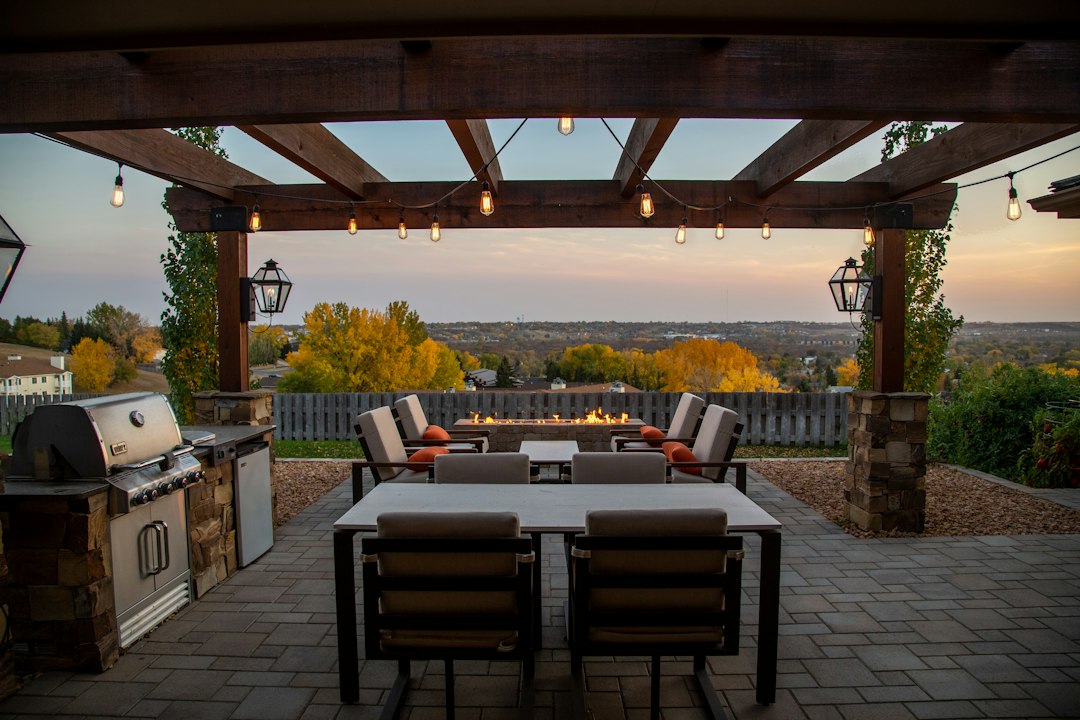
An outdoor space that’s only pleasant for two hours a day in perfect weather is an outdoor space you won’t use. The key to consistent use is expanding the range of conditions where being outside feels better than being inside. That means addressing sun, wind, temperature, and bugs with the same attention you’d give to selecting pretty throw pillows.
Shade changes everything. Creating shade through structures like pergolas or strategically placed plantings can significantly expand the hours an outdoor space is comfortably usable, turning a space that’s brutal at noon into one you can enjoy from morning until evening. Consider where the sun hits at different times. If you want to have coffee outside at 7 a.m., you need to know whether that spot will be in blazing sun or cool shade. If you imagine evening dinners, you need to understand the late afternoon angle. Shade sails, umbrellas, pergolas with climbing plants, or even a carefully positioned tree can make a space usable when it would otherwise be unbearable.
The best rooms have a view, but the best view is wasted if the room itself is uncomfortable.
– Sarah Susanka
Wind is the silent enemy of outdoor comfort. Even on warm days, a constant breeze can make sitting outside feel unpleasant. If your space is exposed, consider screens, glass panels, or strategic plantings to create a windbreak without making the area feel closed in. Temperature control extends the season. A fire pit or outdoor heater can add weeks or even months of usability in cooler climates. Conversely, a misting system or ceiling fan can make summer afternoons bearable. And yes, bug control matters. Citronella candles, screened areas, or even a simple oscillating fan (which disrupts the flight patterns of most insects) can mean the difference between staying outside and retreating indoors in frustration.
Focus on Function Before Beauty
We’ve all seen those magazine-perfect outdoor rooms with pristine white furniture, dozens of matching pillows, and decorative objects arranged just so. They’re lovely to look at. They’re also usually a nightmare to maintain and rarely designed for actual living. Prioritizing function over aesthetics is crucial for designing an outdoor space that homeowners will genuinely use, and that doesn’t mean sacrificing style. It means choosing style that serves your real life.
Start with surfaces. Is your dining table easy to clean after a meal, or do you have to treat it like fine furniture? Can your seating cushions stay outside or do they need to be carried in before every rain? Are your planters heavy enough to stay put in wind but light enough to rearrange when needed? Every maintenance task you create for yourself is a small friction point that adds up over time. Choose materials that weather well, that don’t show every spill or dirt smudge, and that look better with age rather than worse. Teak, cedar, powder-coated metal, and all-weather wicker earn their popularity because they actually hold up to real use.
Storage matters more than you think. Well-designed outdoor spaces should feel like a natural extension of your home, which means having what you need when you need it. A weatherproof storage bench can hold cushions, throws, citronella candles, kids’ toys, and reading material. A small outdoor cabinet near your grilling area can keep plates, utensils, and napkins handy so you’re not running inside twenty times during a meal. The easier it is to have what you need right there, the more often you’ll actually use the space.
Create Zones for Different Activities
Even a small outdoor space can accommodate multiple uses if you think in zones rather than in one monolithic “outdoor room.” This approach is particularly valuable because different household members may use outdoor space differently, and your own needs shift depending on time of day and mood. A reading nook doesn’t need to be separate from a dining area. It just needs a comfortable chair positioned differently, perhaps angled away from the table with its own small side table for a drink and a book.
Consider defining zones through positioning rather than barriers. A lounge area with deep seating faces one direction, a dining set faces another, and a small workspace with a counter-height surface faces a third. They can all exist in the same physical space while serving completely different purposes. Outdoor rugs, changes in flooring material, or even the pattern of planters can visually separate areas without requiring walls or dividers. Lighting reinforces zones beautifully. String lights over the dining area create an intimate feeling there, while a reading lamp next to a chair says “this is where you curl up with a book,” and path lights define the way between spaces.
Think about the times you’d actually use each zone. Morning coffee might need eastern light and a compact table. Evening relaxation might need western views and deeper, more lounging-friendly seating. Afternoon work sessions might need shade and a surface large enough for a laptop. You don’t need separate areas for each, but you do need to choose furniture and positioning that accommodates your highest-priority uses without compromising them for the sake of an arrangement that looks good but serves nobody well.
Last Thoughts
The outdoor spaces we actually use are rarely the ones that look most impressive in design magazines. They’re the ones that integrate seamlessly into our daily routines, that require minimal effort to enjoy, and that solve real problems rather than create new maintenance burdens. More than 70% of market professionals believe that updated outdoor living spaces significantly impact home value, which is encouraging, but that value comes not just from the space existing but from it being genuinely livable and inviting. When you design with honest self-knowledge about how you spend your time, when you remove the small obstacles that keep you inside, and when you prioritize comfort in real conditions over aspirational aesthetics, something shifts. Your outdoor space stops being a project or an ideal and becomes simply an extension of your home that you naturally gravitate toward. It becomes a place where you actually live parts of your life, not just a place you occasionally remember you have.
Your Questions Answered
What’s the most important first step in planning an outdoor space?
Honestly assess how you’ll actually use the space rather than how you wish you’d use it. Observe your current patterns. Do you tend to spend time outside in the morning or evening? Do you eat meals outside or just have drinks? Do you need a place to work, to play with kids, or to entertain friends? Your honest answers to these questions should guide every design decision, from furniture selection to positioning to accessories.
How can I make my outdoor space usable in different weather conditions?
Focus on shade, wind protection, and temperature control. Add a pergola, shade sail, or umbrella to block intense sun. Install screens, glass panels, or plant hedges to reduce wind. Consider a fire pit or patio heater for cool evenings and a fan or misting system for hot days. Even simple solutions like weatherproof cushions and throws can extend your comfort range significantly across different conditions.
What’s the biggest mistake people make when furnishing an outdoor area?
Choosing furniture based on appearance rather than maintenance and real-world durability. Beautiful pieces that require constant care, that can’t handle weather exposure, or that aren’t actually comfortable for extended sitting will go unused. Select materials that age gracefully, surfaces that clean easily, and seating that’s genuinely comfortable for the amount of time you’d realistically spend there.
How do I create an outdoor space that works for both entertaining and daily use?
Design for your daily use first, then add flexible elements for entertaining. Make sure your everyday seating is comfortable and positioned well, then supplement with lightweight chairs or ottomans that can be moved when guests arrive. Choose a dining table size that works for your household’s regular meals but can be extended or supplemented with a side table for larger gatherings. Your daily use should never be compromised for the sake of occasional entertaining.
Do I need to spend a lot of money to create an outdoor space I’ll actually use?
Not necessarily. The key factors that drive consistent use are comfort, convenience, and solving real obstacles, none of which require expensive solutions. Start with one area you’ll genuinely use, focus on making it comfortable and accessible, and add to it gradually. A well-placed chair with good cushioning and a small side table near your door will get more use than an elaborate setup that’s difficult to access or maintain, regardless of cost.